3DFastCraft Get 4.0.0 beta

Beta  4.0.0  ·  Windows 10 / 11  ·  64-bit  ·  free

Create Fast.
Shape Easy.
Print Simple.

A lightweight 3D modeller for everyone on Windows: drop in shapes, type exact sizes in any unit, cut and combine them, and export a watertight .stl ready to print. No learning curve. No cloud. No account. No installer. Just one file that opens in a second.

New in 4.0.0: the Library — thirty-one parts made to your numbers, from a box with a lid to a roof for a model house and the wheels behind a clock’s hands.

Download the 4.0.0 beta 187 MB · v4.0.0 beta · nothing else to install · stable 3.3.0

In loving memory of Windows 3D Builder. Rest in peace.

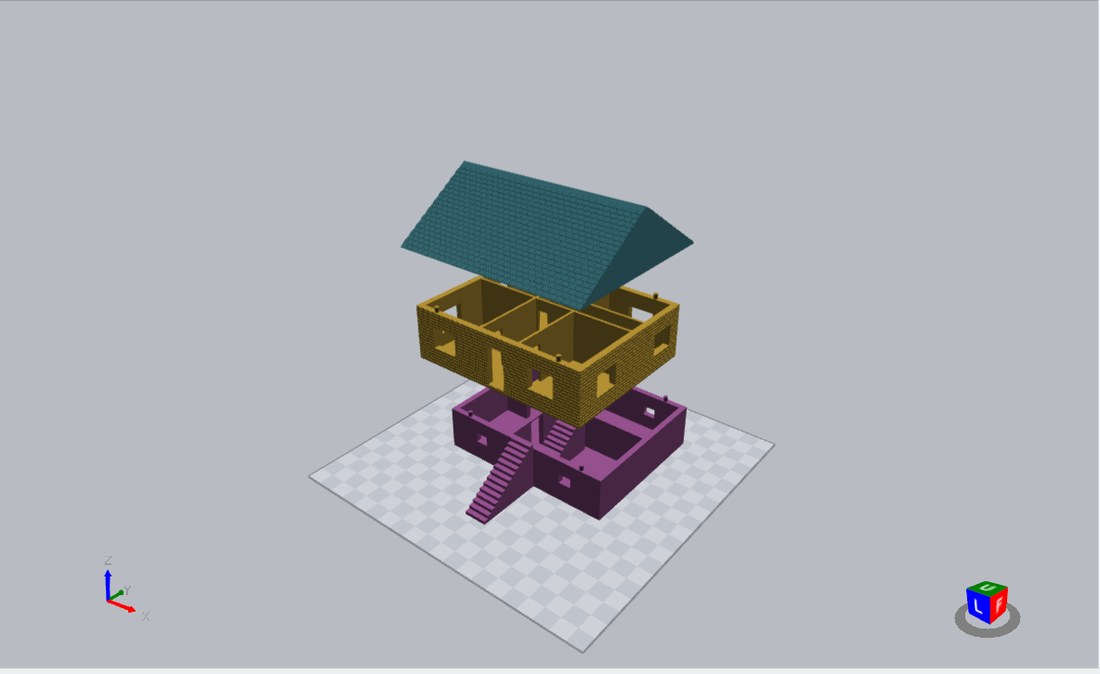
3DFastCraft showing a 1:87 house lifted apart into its printed parts - roof, brick-walled living floor, basement and floor slab - on the build plate
1 : 87  ·  four printed parts  ·  watertight
Units
mm · cm · m · in · ft
Plate
20–2000 mm
Out
STL · OBJ · 3MF · 3DFC
Runtime
None required
Network
Never

What it does§ 01

Shapes, then arithmetic

Nine primitives on a 10 mm grid, or a custom one with its segments and roundness chosen before it is made. Type the size you want — not drag it and hope. Subtract, Intersect and Merge run on Manifold, a geometry engine that does not tear, and every result is checked: if one would not be watertight it is refused, and your object is handed back untouched.

  • Cube
  • Cylinder
  • Cone
  • Sphere
  • Pyramid
  • Wedge
  • Torus
  • Hexagon
  • Tetrahedron
  • Custom
  • Stair

Moulds, worked out for you

Point it at a model and it decides which way the mould comes apart — a ring gets pulled along its hole, not across it — cuts at the widest section, keys the halves together, and drills the pour hole at the high point, with vents where a flat pocket would trap air.

Surfaces that read as material

Brick, roof tiles, wall tiles, planks, wood grain and stripes — cut in or standing proud, on any flat face, including one that already has windows in it.

Lettering and drawings

Any installed font, or the filled shapes of an SVG. Cut, raised, bevelled, and wrapped round a barrel or a ball — or bring the drawing in as a solid of its own.

Mend what will not print

Weld, cap holes, turn inside-out shells the right way. When that is not enough, Rebuild remakes the surface from scratch and Hollow turns a solid into a shell — with one side left open, if it needs one.

Measure, and check it fits

A tape that snaps to corners and edges, either end draggable. Fit check answers the question a render cannot: do these two parts actually meet, and by how much?

Parts that go together one way

Cut a part too big for the plate and pin the halves, or pin two parts that already rest on each other. Pins go only where there is solid round them, spread out towards the edges, and pegs stand up out of the lower part — nothing hangs off an underside, and every one is marked on the cut before it is made. Or join them with brick studs, which hold by grip.

Twist, taper, bend

Turn a shape more the higher it goes, narrow it to a spire, or curve it over like a horn. Edges are broken up only where the curve needs them, so a twisted column stays light — and nothing is cut, so nothing can tear.

Brick-compatible

Studs on any flat face and the brick underside that goes over them, on the 8 mm grid — on a brick, a disc or a scan cut flat. A printable Fit test finds the tolerance your filament needs.

A flat base under anything

Extrude down cuts at a height you drag and carries the outline straight to the plate: a clean plinth under a scanned bust with a ragged neck, a body under a relief that is only a skin.

The files slicers want

STL and OBJ in and out, and 3MF — 3D Builder's own format — with parts, names, colours and units kept. SVG drawings come in as solids. Drop a file on the window, or double-click one.

It tells you when it is not sure

Watertightness is checked on every export, and every risky operation says plainly what it did — or refused to do, and why. A modelling tool for printable parts should be hard to leave broken quietly. That is the whole design brief.

Made with it§ 02

A 1:87 house built entirely inside the app, by driving its own buttons — then checked by ray-testing the exported STLs against a list of points. 74 checks, all passing.

Three printed parts of a 1:87 house shown apart: basement, living floor and roof
Fig. 01 Three parts, no glue — dowel pins between each pair
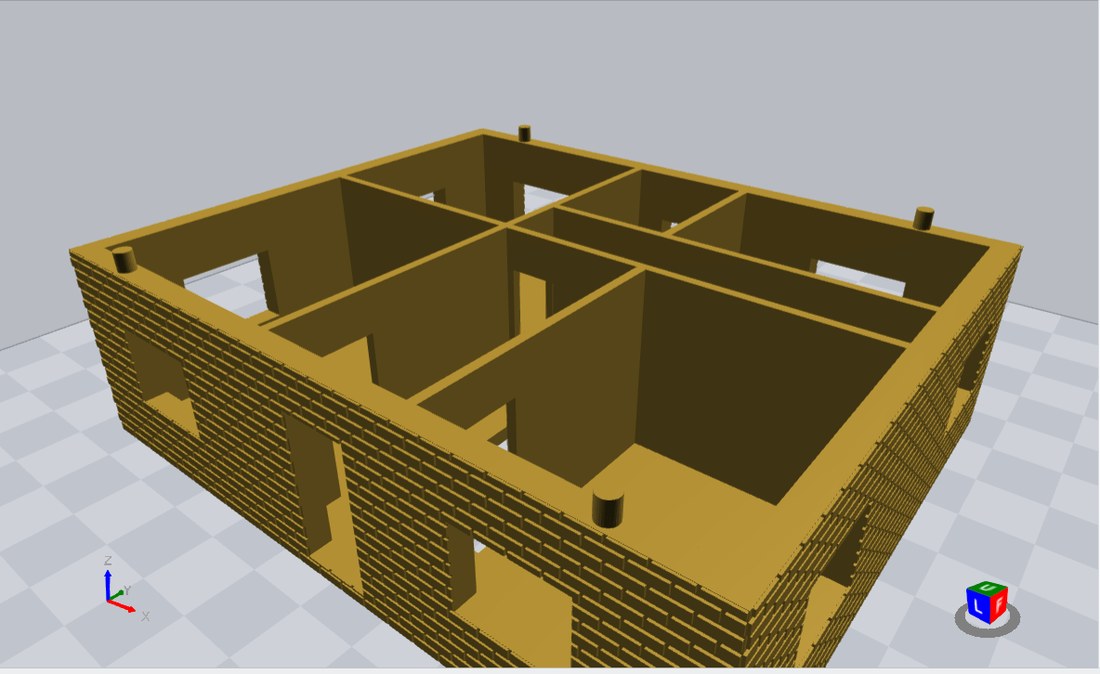
Brick courses laid around window openings that were already cut
Fig. 02 Brick laid around openings already cut
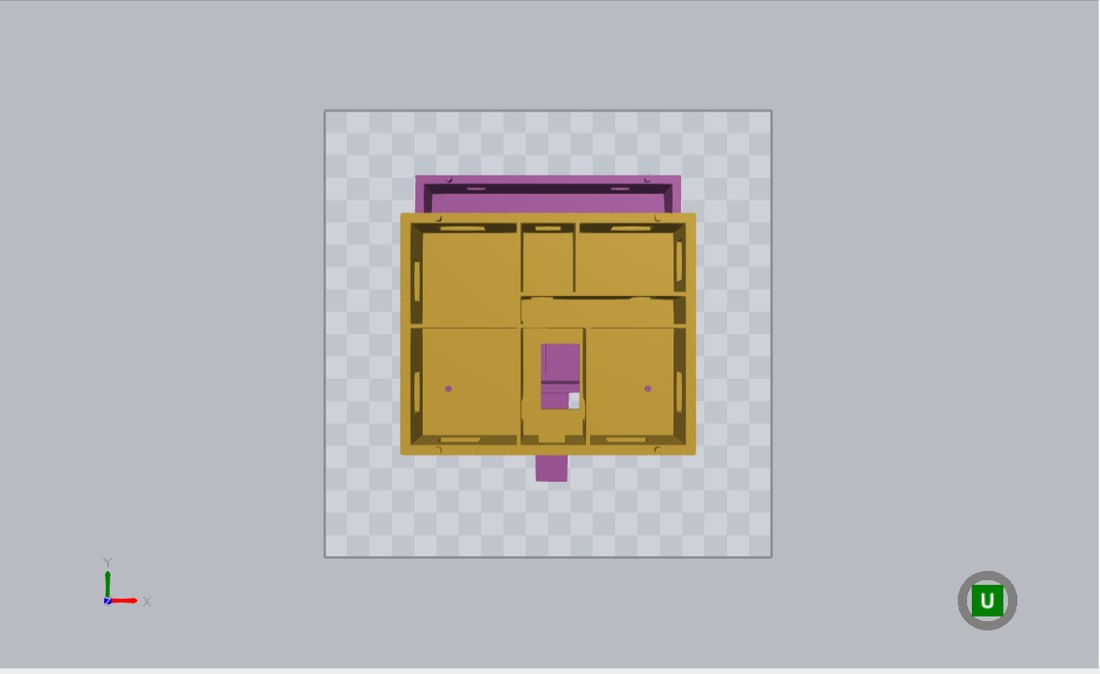
Plan view of the interior layout: six rooms, a hall and the stair opening
Fig. 03 Interior layout, roof lifted off
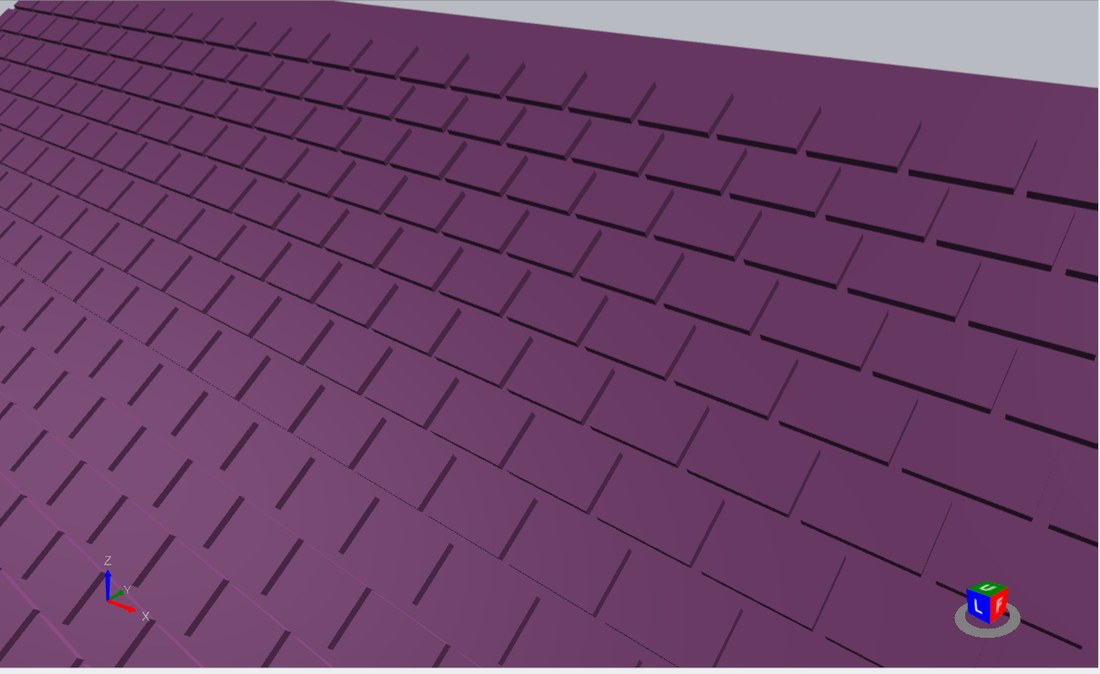
Close-up of roof tiles, staggered courses with a heavier line under each
Fig. 04 Roof tiles at 30 × 20 cm, to scale
A pen pot in two filaments: an orange outer shell with lettering cut clean through it, a blue sleeve showing through the letters, and a pierced blue base beside it
Fig. 05 Two filaments, three parts — the letters are cut through the shell and the sleeve behind shows in the second colour

Six tabs, and what is on each§ 03

The ribbon is split by what a tool changes: Edit changes the thing itself, Align changes where it sits, and Tools is the work around it — measuring it, mending it, casting it, and building it into parts that fit together. Nothing is buried in a menu. And if all of it is more than you came for, Classic mode puts the ribbon back to the tools 3D Builder had, and Extended mode goes the other way and adds the specialised ones. Whichever you pick, every key still works and no tool’s own settings are hidden — only its button.

§ 03.1

Insert

Nine primitives, the Library in Extended mode, Custom for a shape with its size, segments and roundness chosen first, Fit test plates for finding the tolerance brick studs need, and the way in for anything made elsewhere. Every shape lands on the plate at a sensible size and takes its colour from a six-step cycle, so a scene stays legible without anyone painting anything. Import reads STL, OBJ and 3MF, SVG drawings as solids, and another 3DFastCraft project — which joins the plate rather than replacing it. Sketch draws your own outline on the plate — lines, arcs, curves, freehand, or an SVG loaded in — and extrudes or revolves it into a solid. Text now bends a line of lettering round a circle or round a cylinder as well as laying it flat, and Lithophane turns a photograph into a plate that only shows when it is lit from behind.

On the plate: one of nearly everything on the tab — the nine primitives, a gear and its partner, a ratchet and pawl, an M8 bolt and nut from Thread, brick-stud fit plates, and the app's own name from Text — with the hexagon selected and its move arrows on it.

The Insert tab of 3DFastCraft: the nine primitive shapes, gears, a ratchet, a bolt and nut, and 3D lettering on the build plate

§ 03.2

Edit

Everything that changes the selection, from a boolean down to a colour. Undo and redo, Copy, Cut and a Paste that lands exactly where the thing came from, duplication beside or in place, and delete.

Boolean arithmetic on Manifold with the app's own BSP engine behind it — Subtract, Intersect and Merge. Any of it can be stopped part-way and leaves the model as it was; if a result would not be watertight it is refused and the objects are handed back untouched. Split takes a plane you can slide, tilt by dragging a ring, or set to a face you click. While you aim it the half that would be thrown away is faded, so you see what you are keeping before you commit — and the cut goes through the triangles rather than through the boolean, so a 200,000-triangle scan splits in a twenty-fifth of a second with both halves closed.

Set pivot puts the point a part is measured and turned about wherever you click, instead of the middle of its bounding box — a gear turns on its shaft, not on the outline of its teeth. Then Round, Twist, Taper and Bend to reshape it, Simplify and Smooth for a dense import, and Hollow to save material.

On the plate: a plain cylinder twisted into a vase, 50 × 50 × 80 mm and watertight, with the resize handles on it and the whole tab behind — undo through to colour in one row.

The Edit tab of 3DFastCraft: a cylinder twisted into a vase, selected, with the resize handles on it

§ 03.3

Align

Where a thing sits, without changing the thing. Drop to the plate, lay a part on a face you pick — every face it can rest on is marked — mirror it, line a selection up on any axis — flush either side, centred, or spread evenly. Align to centres one object on another.

On the plate: four M8 bolts spread evenly along Y, the whole selection moved as one — the status line says what it did.

The Align tab of 3DFastCraft: four printed bolts spread evenly along the build plate

§ 03.4

Tools

The work around a model rather than its shape. Measure and Fit check answer a question and leave both parts alone — how long, or how far two of them overlap. Repair and Rebuild mend a model that will not print, the second by remaking the surface from scratch when the first cannot. Mould makes a block to cast silicone in, cut so the casting comes out, with registration keys and a pour hole.

Voronoi cuts a solid into a web of struts — a shell that follows the surface for a lamp or a vase, or a lattice through the whole volume to take weight out of a part that still has to be stiff. Hull wraps a selection in one skin, Emboss and Engrave put lettering, a drawing or brickwork on a face you pick, Repeat copies a part along a line or round a circle, and Extrude down puts a flat base under a scan. Split with connectors cuts a part too big for the plate into halves that pin back together — separate pins, pegs or brick studs, square to the cut, vertical or horizontal — and Connect objects does the same for two parts that already rest on each other. If there is no room for a pin, it says how thick the wall would have to be rather than cutting one through the side.

On the plate: a scanned head between the two halves of the silicone mould made for it, and Measure along an edge of one half, snapped to its corners: 135.09 mm.

The Tools tab of 3DFastCraft: a scanned head between the two halves of its silicone mould, with a measurement along one half

§ 03.5

File

New, open, recent, save, and named versions kept inside the project file so you can go back to one. Export asks what to write before it writes it: everything or the selection, binary STL, ASCII STL, OBJ or 3MF, and whether to drop the result to the plate. Blueprint draws the model as an engineering drawing — front, top and right views and an isometric, hidden lines dashed, the overall dimensions and a title block — to print, or to save as a PDF.

On the screen: Export asking what to write — everything on the plate or just the selection, and which of the four formats — with the totals it is about to produce: 11 objects, 29,334 triangles, 326.6 cm³.

The File tab of 3DFastCraft with the Export window open: what to write, the four formats, and the totals it is about to produce

§ 03.6

View

Six axis views and isometric, wireframe, x-ray to see a part buried inside another, Overhangs to show in red what will need support, and the build plate at your printer's width, depth and height. Scale 1: changes no geometry at all — it tells you what a millimetre means, so a model reads in metres as well.

On the plate: the 1:87 house with its parts lifted apart, the units switched to feet and the scale list open — sixteen standard scales from full size down to 1:220, with 1:87 picked, so the floor slab reads 0.509 × 0.361 ft.

The View tab of 3DFastCraft: a 1:87 house lifted apart, with the model scale list dropped down at 1:87

New features§ 04

Windows 3D Builder was a beautiful thing: fast modelling for professionals and for people who had never modelled anything, with almost nothing to learn before the first part was on the plate. Microsoft retired it. This app exists to take its place: a free Microsoft 3D Builder alternative that works the same way — the same short path from a shape on the plate to a printable part. These are the thirty tools it adds on top.

  1. StairTreads, risers, width and a rise per turn as one object you type the numbers for.
  2. Subtract with toleranceTakes the cutter out a fraction wider than it is, so the two printed parts actually fit.
  3. Duplicate in placeA copy exactly where the original stands, ready to be cut about — or beside it, clear of it.
  4. RepeatAlong a line, round a circle or in a grid of rows, columns and layers - with a rise per step for a spiral stair.
  5. AlignLay a part on a face you pick, with every face it can rest on marked; line a selection up flush, centred or evenly spread; or move a whole selection onto the middle of a picked face, independently on each axis.
  6. Fit and distributeShrink a part too big for the bed to fit it with room to spare, or set a selection out in rows across the bed a gap apart - the bed being your printer's, width, depth and height.
  7. Keep on bedA part standing on the bed stays there while it is resized, growing upward only rather than into the bed where the slicer would cut it off.
  8. Pattern engravingBrick, roof tile, wall tile, plank, wood grain and stripes — cut in or standing proud, and laid around openings already cut.
  9. Round edgesA cube or cylinder rebuilt with its edges rounded to the radius you ask for.
  10. RebuildRemakes the surface from scratch when Repair cannot mend it.
  11. MouldA block to cast silicone in: works out which way the mould comes apart, cuts at the widest section, keys the halves together and drills the pour hole.
  12. In-file versioningNamed snapshots kept inside the .3dfc project itself, and a way back to any of them.
  13. Scale auto conversionSet 1:87 and every box reads in real metres beside the millimetres. Type into either one.
  14. Split with connectorsCut a part too big for the plate into halves that go back together one way only: round pins, or round or square pegs standing up out of the lower half.
  15. Connect objectsPins, pegs or brick studs through the face two parts rest on each other on - only where both have solid material, each part kept as itself.
  16. Custom shapesA cube, cylinder, cone, sphere or torus with its size, segments and roundness chosen before it is made, shown on the plate as you set them.
  17. Twist, taper and bendReshape a part by how high each bit of it stands - spirals, spires, horns - with nothing cut and nothing to tear.
  18. Brick studsStuds on any flat face, or the underside that presses onto them, on the 8 mm grid - and as a connector between two halves, gripping as a real brick does.
  19. Fit testFour small plates at four tolerances, marked with notches. Print once per filament and type the one that grips.
  20. 3MF with a pictureExported 3MF files carry a thumbnail, so Windows shows the model as the file's icon rather than a blank page.
  21. GearsInvolute gears, ring gears and racks, straight, helical or herringbone, cut as a gear cutter would cut them - with a bore, a hub, and a partner made already in mesh.
  22. Screw threadsISO metric M3 to M20, or any diameter and pitch: a threaded rod, a bolt, a nut, or a threaded hole cut straight into a part, with a clearance so printed parts screw together.
  23. HolesPlain, countersunk or counterbored screw holes with a nut pocket if wanted, and heat-set insert pockets, M2 to M8 in the standard sizes - one, a row or a bolt circle, moved and turned into place and cut straight into a part.
  24. BlueprintFront, top and right views and an isometric, hidden lines dashed, overall dimensions and a title block, at a standard scale - printed, or saved as a PDF.
  25. Lettering as an objectA sign, a name tag or a keychain in any installed font, lying on the plate or standing up.
  26. Hide and lockHide a part to work round it, or lock it so nothing can move it by accident - both kept in the project.
  27. Overhang checkFaces that will need support shown in red, at the angle your printer manages, before the slicer tells you.
  28. SVG importA drawing's filled shapes, holes kept, made as thick as you ask and laid on the plate.
  29. SketchDraw on the plate with lines, arcs, smooth curves or freehand, or load an SVG - then extrude it to a height or revolve it into a vase, a knob or a wheel.
  30. HullWrap several parts in one skin, as cling film pulled tight would: two cylinders into a slot, a row of spheres into a rounded bar.

The Library§ 05

New in 4.0.0: parts made to your numbers. Pick one from the catalogue on the Insert tab (Extended mode), set its sizes with the preview standing on the plate, and insert it. The part remembers how it was made — select it later and Edit settings makes it again where it stands. Walls and fits start from your printer’s nozzle, layer and clearance, and every setting either makes a sound, watertight part or says plainly, in red, why it cannot. Thirty-one generators in seven groups.

Boxes

  • Open boxSized from the outside, walls and floor as one solid, corners rounded or not.
  • Box with a lidLift-off or sliding, printed side by side and fitted by your printer’s clearance.
  • Divided trayAn open tray split into a grid of compartments, for screws, beads or anything sorted.
  • Gridfinity binA bin for the Gridfinity storage grid, in whole grid units, to the published sizes.
  • Gridfinity baseplateThe grid the bins stand in, open underneath; several print side by side to fill a drawer.
  • Screw-top jarA round jar and a lid that screws onto its neck.
  • Electronics enclosureA box for a board, with standoffs at its mounting holes and a lid.

Buildings

  • StairA straight flight arriving level with the floor above; the risers said in real millimetres at the model’s scale.
  • WindowFrame, glazing bars and sill, with the glass as a part of its own to print in clear filament.
  • DoorPlain, panelled or glazed in its frame, and a warning when people would have to stoop through it.
  • RoofGable, hip, half hip, lean-to, gambrel, mansard or flat, hollow to sit on the walls, tiled, slated, shingled or sheeted.

Mechanisms

  • GearInvolute spur, helical, herringbone, ring, rack, bevel and worm, with a partner made already in mesh.
  • Gear trainCompound spur gears to a ratio, the tooth counts found for you.
  • Planetary gear setSun, planets, ring and carrier, the tooth counts checked so every planet meshes.
  • Geneva driveA driver stepping a slotted wheel round one slot a turn.
  • Disc camA cam that lifts its follower by the rise, dwell and return you choose.
  • Clock motion workThe wheels behind a clock’s hands, twelve to one, with the hands and a stand to turn it by.
  • Four-bar linkageFour links and their pins, with what the linkage does worked out beside them.
  • Crank and sliderA crank, a rod and a slider block, with the stroke worked out.
  • Print-in-place bearingTwo races and the balls between them, printed together.

Fasteners

  • ThreadISO metric rods, bolts, nuts, and threaded-hole cutters cut straight into a part.
  • WasherPlain washers, ISO 7089 sizes to start from.
  • KnobA hand knob with a pocket for a nut or a bolt’s head.
  • SpacerA tube to hold two parts apart on a screw.

Hinges

  • Knuckle hingeTwo leaves and a pin, printed in place or with the pin separate.
  • Living hingeTwo plates joined by a thin web that bends — PP or PETG; PLA cracks.

Clips

  • Snap-fitA cantilever hook and its catch, sized so the beam bends without breaking.
  • Cable clipSnap-in clips side by side on a strip, to screw or stick down.

Organisers

  • Drawers and cabinetA cabinet and the drawers that slide into it, each with a pull.
  • Battery holderA block with a pocket for every cell, in rows and columns.
  • Pegboard hookFor one-inch pegboard with quarter-inch holes.

How it works

  • A cataloguePictures of every part, search, favourites, and presets for the sizes people make most — an AA holder, an M3 nut, a Georgian window.
  • Turn itA mechanism turns on the plate before you insert it. Each part moves only when something pushes it, so a gear, a Geneva wheel or a clock’s hands go round as the printed parts will — and a jam stops it, with the two parts that met shown red.
  • Settings that go wrong say soNumbers that cannot be made are said in red beside them, not in a dialog, and nothing is inserted until they can.
  • At the model’s scaleSet 1:87 and a stair, a window, a door or a roof says what it would be full size.
  • Room on the plateA new part lands clear of what is already there, and a window’s glass arrives on its own filament.
  • BetaNew, and still being proved out: check a part before you print it. Stair, Thread and Gear come from 3.3 with the same settings as before.

Download§ 06

Beta

3DFastCraft 4.0.0 beta

One self-contained file. No installer, no .NET runtime, no account. Download it, double-click it.

It is a beta: new, and still being proved out. Check what it gives you before you print it. The stable version is 3.3.0, on the main page — the two run side by side.

Windows SmartScreen will object the first time — the executable is not code-signed. More info → Run anyway.

SHA-256published with the beta

Needs

  • Windows 10 or 11, 64-bit
  • Graphics that do Direct3D 11 — integrated is fine, no separate card needed
  • About 400 MB of disk

New in 4.0.0 beta

  • The Library on the Insert tab (Extended mode): thirty-one generators, with pictures, search, favourites and presets
  • A generated part remembers its settings: select it and Edit settings to make it again where it stands
  • Mechanisms turned on the plate before they are inserted, and a jam shown in red
  • Windows, doors and roofs for model houses, sized as the model is drawn and read at its scale
  • A printer profile — nozzle, layer, clearance — that walls and fits start from
  • New parts land clear of what is already on the plate
  • Stair, Thread and Gear moved into the Library, with the same settings as before

All releases →